
Artificial intelligence in the KYC process: the future of fighting money laundering
October 17, 2023 · 5 minutes
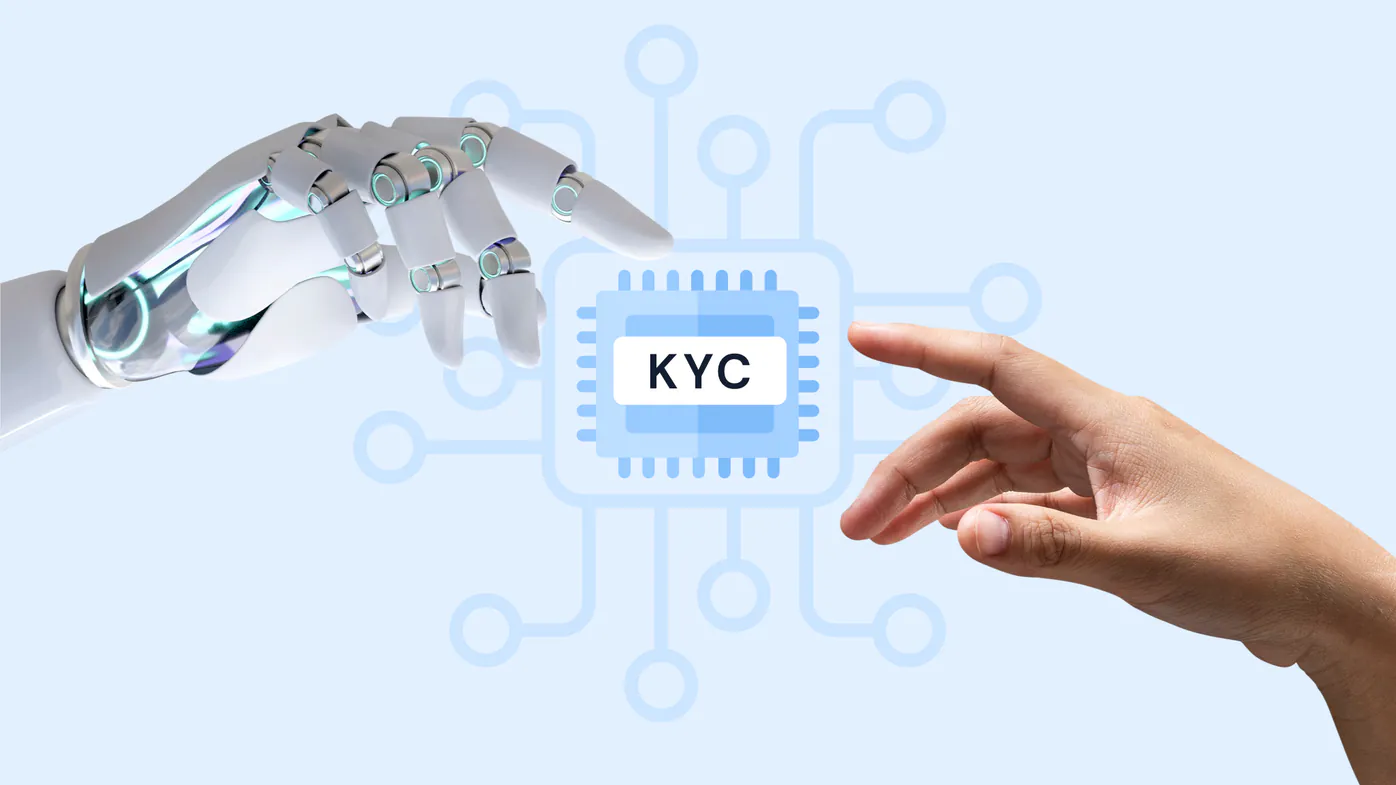
In a world shaped by increasing digitalization and connectivity, identity verification plays a crucial role. Companies and organizations face the challenge of verifying the identity of their customers and business partners to prevent fraud and money laundering. This is where artificial intelligence (AI) comes in, revolutionizing the way we carry out the Know Your Customer (KYC) procedure.
KYC at a glance
KYC is a process in which companies and financial institutions collect information about their customers to ensure they are legitimate and trustworthy. This process is not only a legal requirement but also an essential part of a risk management strategy. Traditionally, KYC required a lot of manual work, as staff had to review documents and verify data. On top of that came inefficient email ping-pong with the customer.
AI for KYC
Integrating AI technologies into the KYC process has significantly improved the efficiency and accuracy of identity verification. Here are some of the ways AI is applied in KYC:
1. Automated data collection: AI can capture and consolidate information from various documents and sources. This includes reading ID cards, invoices, contracts and other relevant documents. Automated data collection reduces human error and speeds up the review process.
2. Pattern recognition: AI can identify suspicious patterns and inconsistencies in the collected data. For example, it can automatically detect when the details on an ID card don't match the information submitted.
3. Fraud detection: AI can recognize fraud patterns and spot unusual activity. For example, if someone tries to identify themselves with stolen or forged documents, the AI can raise an alarm.
4. Document verification: AI can verify the authenticity of documents by analyzing watermarks, seals and other security features. This is especially important for detecting forged documents.
5. Risk assessment: AI can assess customers based on their behavior and financial activity. Using data analysis, it can estimate the risk a customer poses and make recommendations for next steps.
Benefits of AI in KYC
Integrating AI into the KYC process offers numerous benefits:
- Speed: AI can complete tasks in seconds, speeding up the KYC process and giving customers a smooth experience.
- Precision: AI delivers accurate, consistent results without being influenced by human error or bias.
- Cost savings: Automating KYC reduces the need for human resources and significantly lowers operating costs.
- Better fraud prevention: AI can detect and prevent fraud attempts faster, protecting businesses from financial losses.
- Scalability: The technology can easily be adapted to a company's volume and requirements.
Challenges and concerns
Despite the many benefits of AI in KYC, there are also challenges and concerns. Data protection and security are particularly important. Processing sensitive personal data requires strict regulation and protection against unauthorized access. Companies must ensure that their AI systems meet these requirements.
Another point is the need to maintain human oversight and control. AI systems are not error-free and can trigger false alarms. It's important that qualified staff review these alerts and decide what action needs to be taken.
How BetterCo uses artificial intelligence to run not only the KYC process but the entire customer lifecycle efficiently
Customer due diligence
- Automated data collection: around 80% of the data is pre-filled, speeding up your onboarding process fivefold
- Automatic retrieval of documents from the commercial register: no more email ping-pong – you're always up to date on what's happening with your customers
- Automatic reading of ID documents: using OCR technology, (ID) documents are checked for authenticity, read and, if needed, updated in the master data.
Risk management
- AI-powered risk assessment: our platform assesses risk based on automatically collected data and activity and recommends next steps
Identity verification & signature
- AI-powered identity verification: with BetterCo, you identify your client in just a few minutes. Automated reading of ID documents and authenticity checks effectively prevent identity fraud
Monitoring & governance
- AML engine: BetterCo monitors all PEP watchlists, sanctions lists and adverse media in real time and notifies you as soon as a match with your existing or newly acquired clients / customers is found. Combined with our event ticker, which informs you about relevant events such as changes at shareholder level, you stay up to date and ready for inspection throughout the entire customer lifecycle.
Smart collaboration
- AI-powered linking of documents, contacts, events, reports and tasks: at the heart of your BetterCo workspace are your clients / customers and your shared processes, organized in the digital matter file. Our AI-powered processes keep all information on all your customers up to date and notify you of changes or new risk matches. Digital collaboration has never been this easy!
Conclusion
Combining artificial intelligence and KYC promises to make the identity verification process faster, more accurate and more cost-efficient for businesses. While there are some challenges, the benefits of this technology are considerable and help make the financial industry safer and more trustworthy. However, businesses should make sure they meet data protection and security requirements and maintain human oversight to ensure the integrity of the KYC process.

Related posts
-
 Client onboarding on autopilot – here's how
-
 KYC and data protection: what you should know
-
 Customer focus as a competitive advantage – 5 reasons why it pays off
-
 How do I choose the right KYC platform?
-
 Automate the KYC process in 4 simple steps
-
 What is KYC and why does it matter for my firm?
-
 Anti-money laundering – a health check for your business
-
 Faster client onboarding – made simple
-
 Why you need KYC software as an obliged entity
-
 BetterCo: interview with founder Eckhard Ortwein
-
 Paperwork is a challenge, even when it's digital