
What is KYC and why does it matter for my firm?
September 21, 2023 · 3 minutes

In today's business world, shaped by technological progress and global connectivity, compliance and security play a crucial role. One of the key concepts that companies of every size and industry should keep in mind is KYC, or "Know Your Customer". In this article, we take a closer look at the term KYC, discuss why it matters for your business and how it helps minimize risk and build trust.
What is KYC?
KYC is short for "Know Your Customer" and refers to the process by which companies collect, verify and continuously update information (master data) about their customers. This process serves to verify customers' identity and financial integrity to ensure that they act lawfully and are not involved in illegal activities such as money laundering or fraud. KYC is widespread in many industries, including legal services, tax advisory, banking, financial services, e-commerce platforms and many others.
4 reasons why KYC matters for your firm
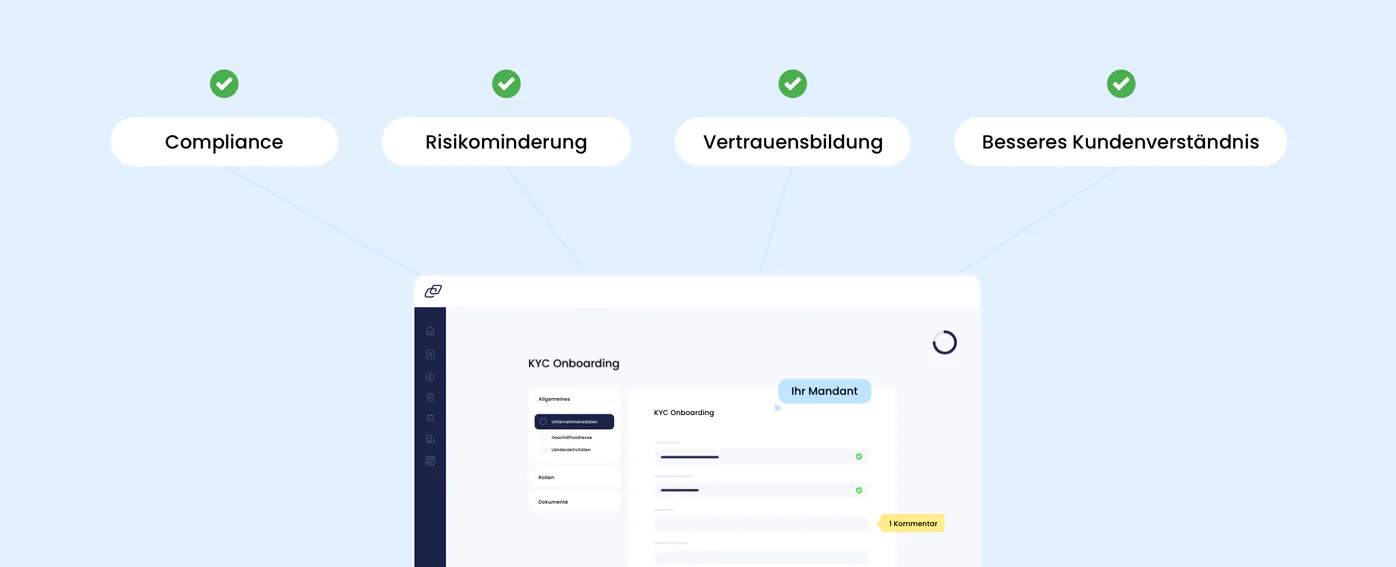
- Regulatory compliance: In many countries and regions, firms are legally required to carry out KYC procedures to prevent money laundering and terrorist financing. Failure to comply with these regulations can have serious legal consequences, including fines and criminal prosecution.
- Risk mitigation: KYC helps companies minimize risk by ensuring they don't do business with criminal or high-risk clients. This protects your firm from financial losses and reputational damage.
- Building trust: By carrying out the KYC process, you show your clients that you care about their security and the security of your business relationship. This can strengthen trust and foster long-term client relationships.
- Better client understanding: By capturing client information in the KYC process, you gain a better understanding of your target group. This lets you offer personalized products and services and optimize your marketing strategies.
How does the KYC process work?
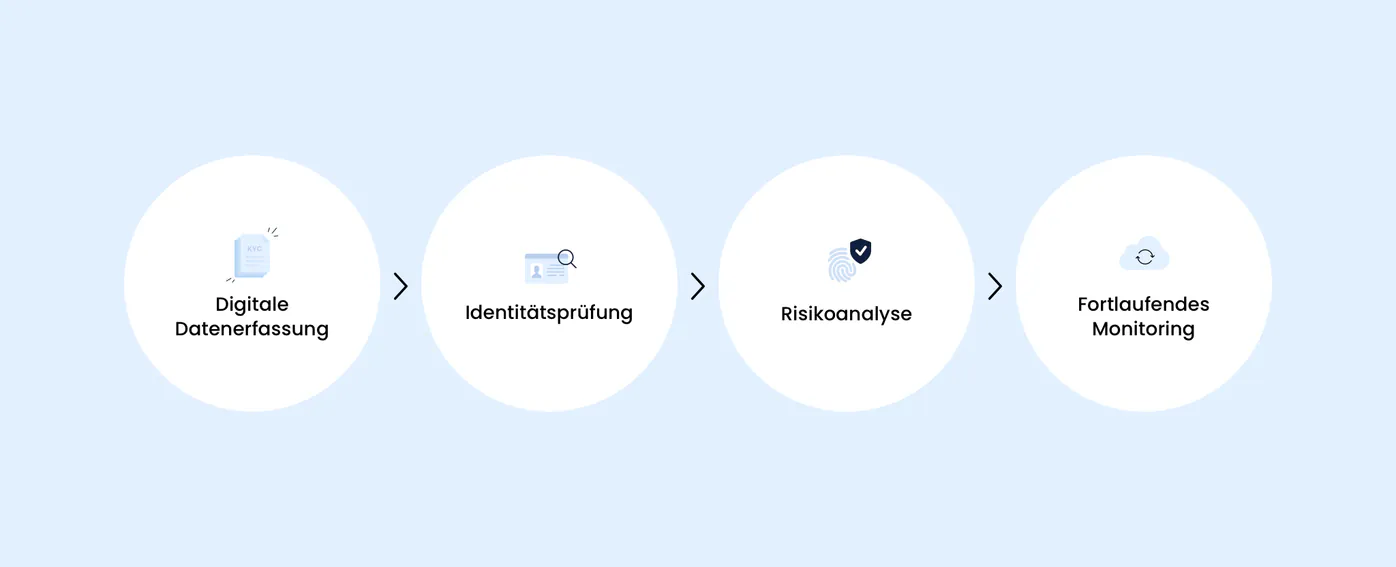
The KYC process typically consists of several steps, including:
- Digital data capture: Capturing master data such as name, date of birth, address and contact details.
- Identity verification: Verifying the client's identity using ID documents such as an ID card, passport or driver's license.
- Risk assessment: Assess your client's risk and check public AML data sources
- Monitoring and updating: Regularly monitoring client information and updating the data to ensure it is current.
Conclusion: Non-compliance comes at a price.
KYC is an indispensable process for firms in an increasingly regulated and connected business world. It helps you comply with legal requirements, minimize risk, build trust and ensure efficient business management. By implementing effective KYC procedures, firms can not only preserve their own integrity but also create a safer and more trustworthy business environment.

Related posts
-
 Client onboarding on autopilot – here's how
-
 KYC and data protection: what you should know
-
 Artificial intelligence in the KYC process: the future of fighting money laundering
-
 Customer focus as a competitive advantage – 5 reasons why it pays off
-
 How do I choose the right KYC platform?
-
 Automate the KYC process in 4 simple steps
-
 Anti-money laundering – a health check for your business
-
 Faster client onboarding – made simple
-
 Why you need KYC software as an obliged entity
-
 BetterCo: interview with founder Eckhard Ortwein
-
 Paperwork is a challenge, even when it's digital