
Why you need KYC software as an obliged entity
August 5, 2022 · 7 min read
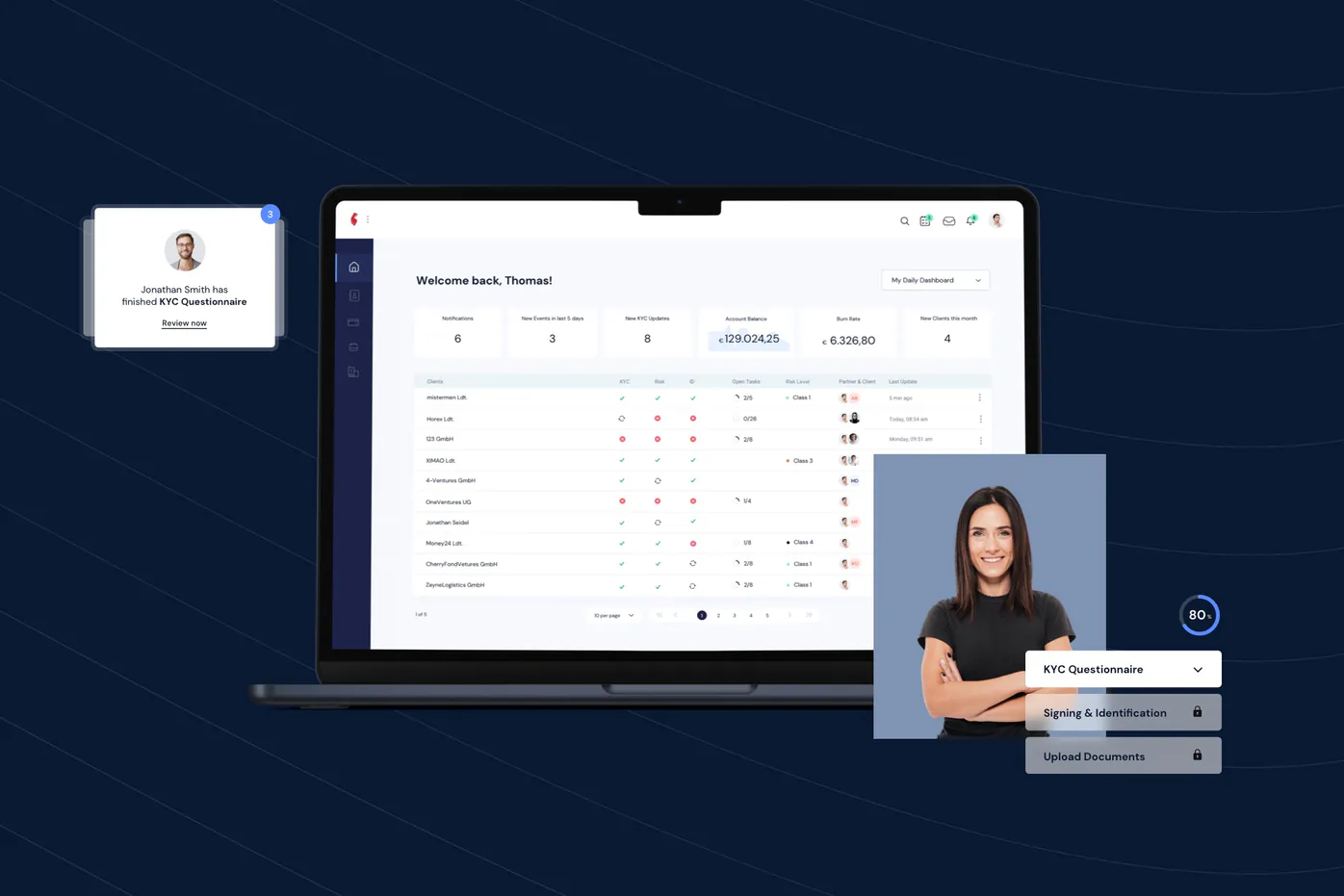
Why you need KYC / KYB software as an obliged entity
The German Anti-Money Laundering Act (GwG) requires a growing number of businesses and entrepreneurs operating in Germany to play an active role in AML compliance. The aim is to prevent illicit money flows from entering the economy. Specifically, this means: obliged entities under the GwG must research the so-called beneficial owners, verify their customers' identity and retain their data.
KYC (Know Your Customer) or KYB (Know Your Business) is part of the general due diligence obligations for obliged entities set out in Section 10 GwG et seq. The customer must be identified and this data must then be verified.
Non-compliance means penalties
That sounds harsh, but it's a fact. Violations of the Anti-Money Laundering Act are punished as administrative offenses with a fine of up to one million euros . Some may wave this off, thinking that, as so often, it only affects large companies and is just media saber-rattling. But that has long ceased to be the case. Individual professionals such as lawyers, notaries and tax advisors are now audited regularly. Even simple violations can result in a fine of up to 150,000 euros. In practice, the fine is often calculated as twice the economic benefit gained from the violation.
Record-keeping and retention obligations
When handling data, companies and self-employed professionals are each responsible for processing it and must ensure that it is stored appropriately and securely.
Extensive documentation obligations are intended to ensure this. The records serve as evidence for the data protection supervisory authority, in judicial review proceedings and, in some cases, for informing data subjects after the fact.
Avoid fines
Successfully meeting this obligation prevents penalties and requires a well-functioning data protection management system. Those responsible must assess which documentation obligations apply to them and introduce processes that ensure compliance. A few lines of text and references in your existing CRM, client file or an Excel list won't do the job – at least not in a legally compliant way. It's worth being aware of this to avoid unpleasant and potentially costly surprises.

A lack of compliance can actually cost you quite a lot.
By contrast, being compliant and largely protected is affordable – and it saves you a good deal in administrative costs at the same time. Before we go into this in more detail, let's briefly address a fundamental question:
Who is an obliged entity?
With the law implementing the Fifth EU Anti-Money Laundering Directive, which came into force in January 2020, the group of obliged entities has expanded significantly.
Since then, this group has also included, among others: lawyers, tax advisors and notaries, real estate agents, banks and payment service providers, gold and precious metal dealers, auditors, insurers, auction houses, art dealers and art storage providers, commercial goods traders, and organizers and brokers of gambling – all of whom must comply with stricter due diligence and reporting requirements in their business.
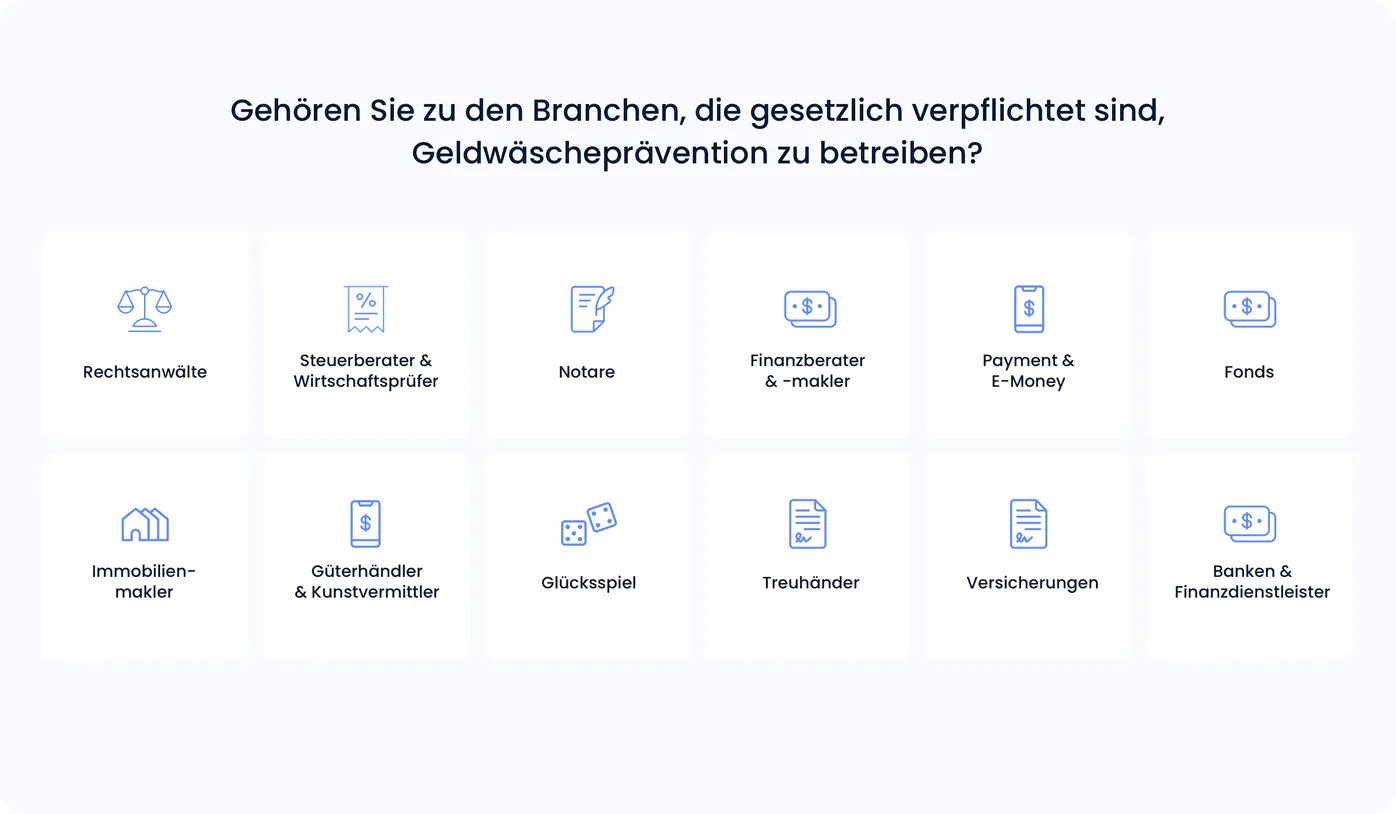
The parties listed above must consistently, continuously and actively watch for any indications of money laundering among their clients or business partners.
Being compliant is a challenge
Many obliged entities are, of course, well aware of the issue and of the options and tools available to comply with the GwG and KYC requirements. In practice, however, day-to-day business naturally takes priority, and the bureaucratic effort is a heavy burden for companies and business owners. The "chaos" of working with the various parties involved creates further risks of gaps in compliance and performance.
It's all too easy for something to be overlooked or simply get lost in the shuffle. Small oversights that can become costly.
KYC software helps avoid fines and risks
Software for KYC processes helps minimize financial risk. It averts damage that corruption, money laundering and terrorist financing can cause to the company.
With a suitable collaboration platform, working together with all parties becomes not only more efficient but also more secure, ensuring maximum compliance.
As a result, you can enhance your reputation, avoid damage to your image and loss of trust, and even achieve significant cost savings.
While a few software solutions with different approaches already exist, there is still no reliable, easy-to-use and secure end-to-end solution.
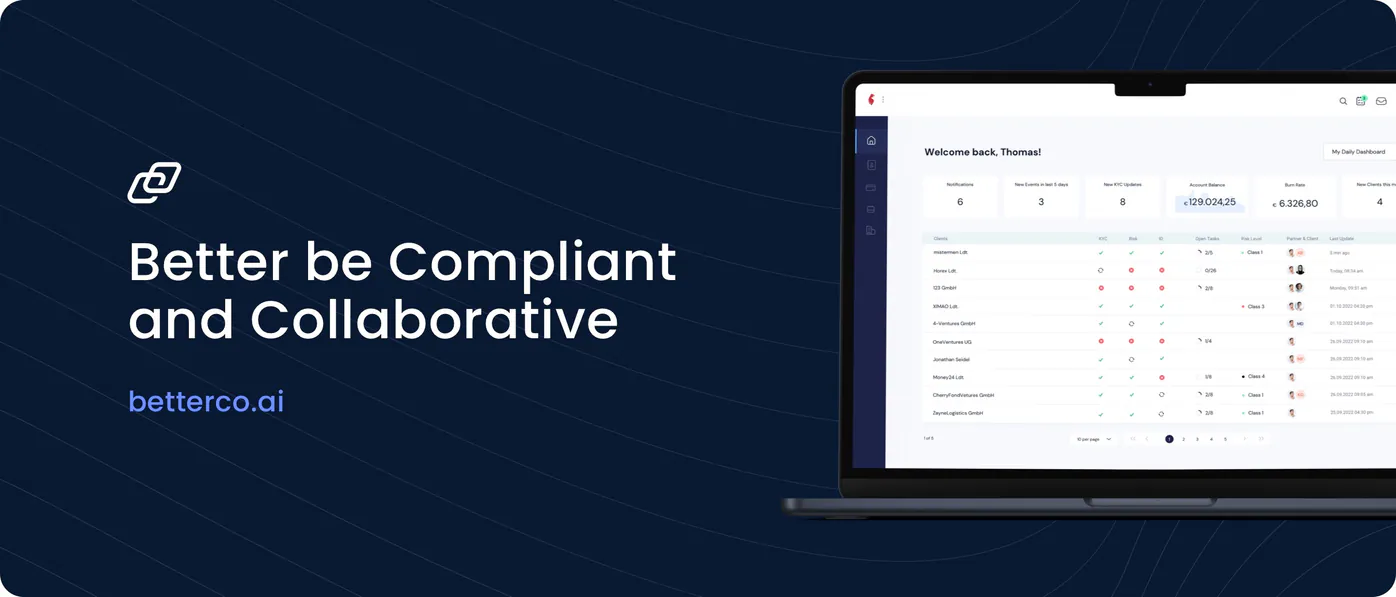
This is exactly where BetterCo comes in. As an intuitive KYC and trust platform for all stakeholders, BetterCo offers companies and advisors with KYC obligations a central solution. This single-source-of-trust platform delivers legal compliance and a digital client experience at the same time. BetterCo is a ready-to-use solution that requires no implementation and no IT effort (or costs).
Interested in getting to know BetterCo better?
Feel free to book a free product demo and find out how BetterCo delivers a clear, shared and unified vision for regulated businesses and everyone involved – while measurably reducing effort, time and costs.

Related posts
-
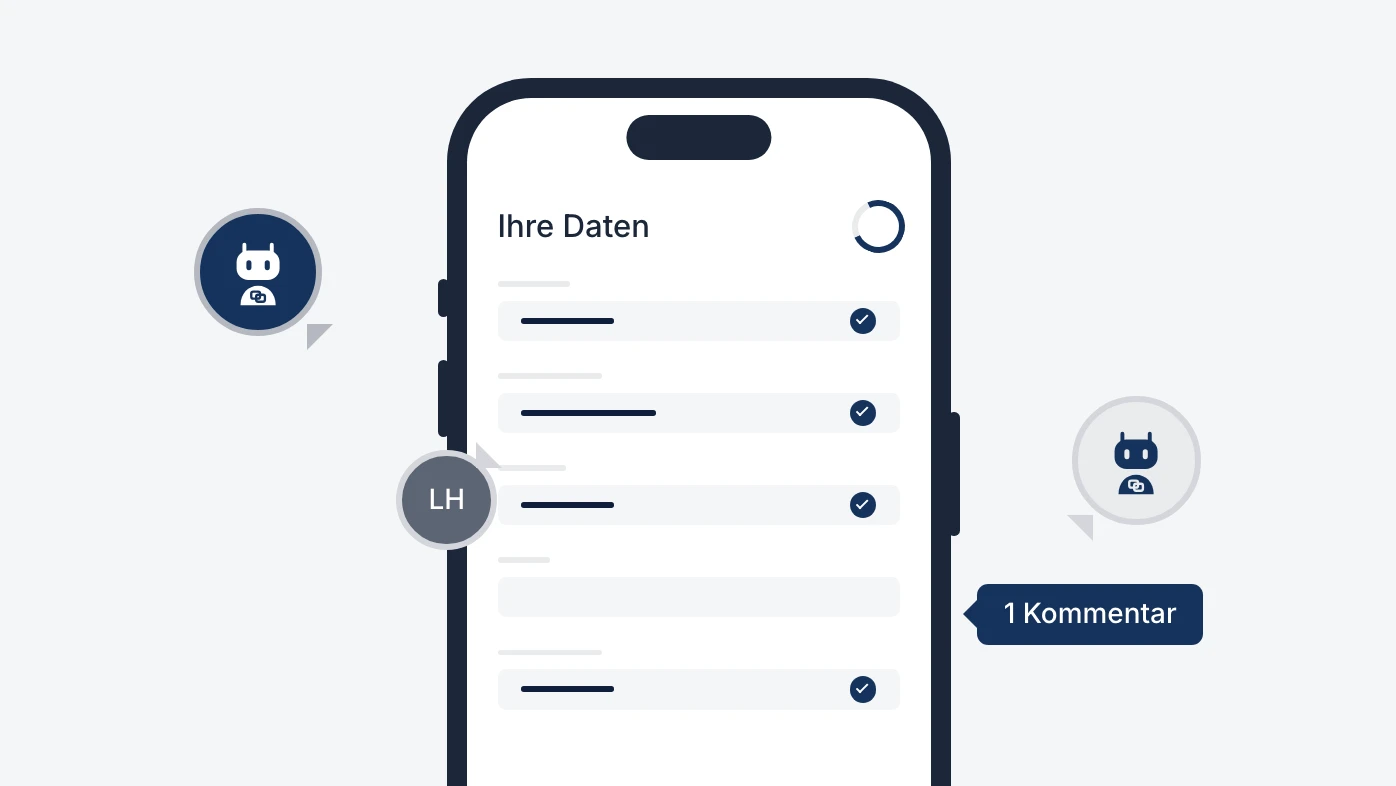 Client onboarding on autopilot – here's how
-
 KYC and data protection: what you should know
-
 Artificial intelligence in the KYC process: the future of fighting money laundering
-
 Customer focus as a competitive advantage – 5 reasons why it pays off
-
 How do I choose the right KYC platform?
-
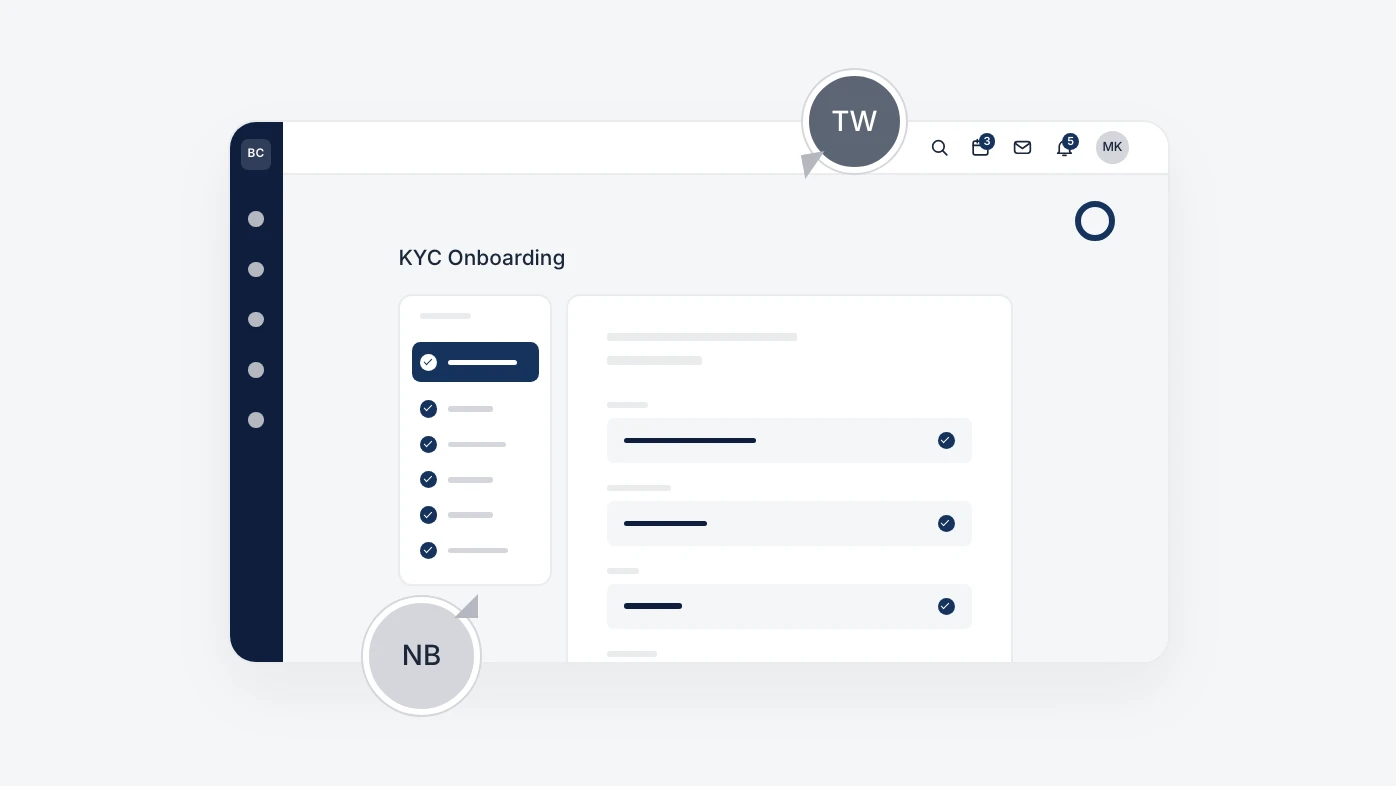 Automate the KYC process in 4 simple steps
-
 What is KYC and why does it matter for my firm?
-
 Anti-money laundering – a health check for your business
-
 Faster client onboarding – made simple
-
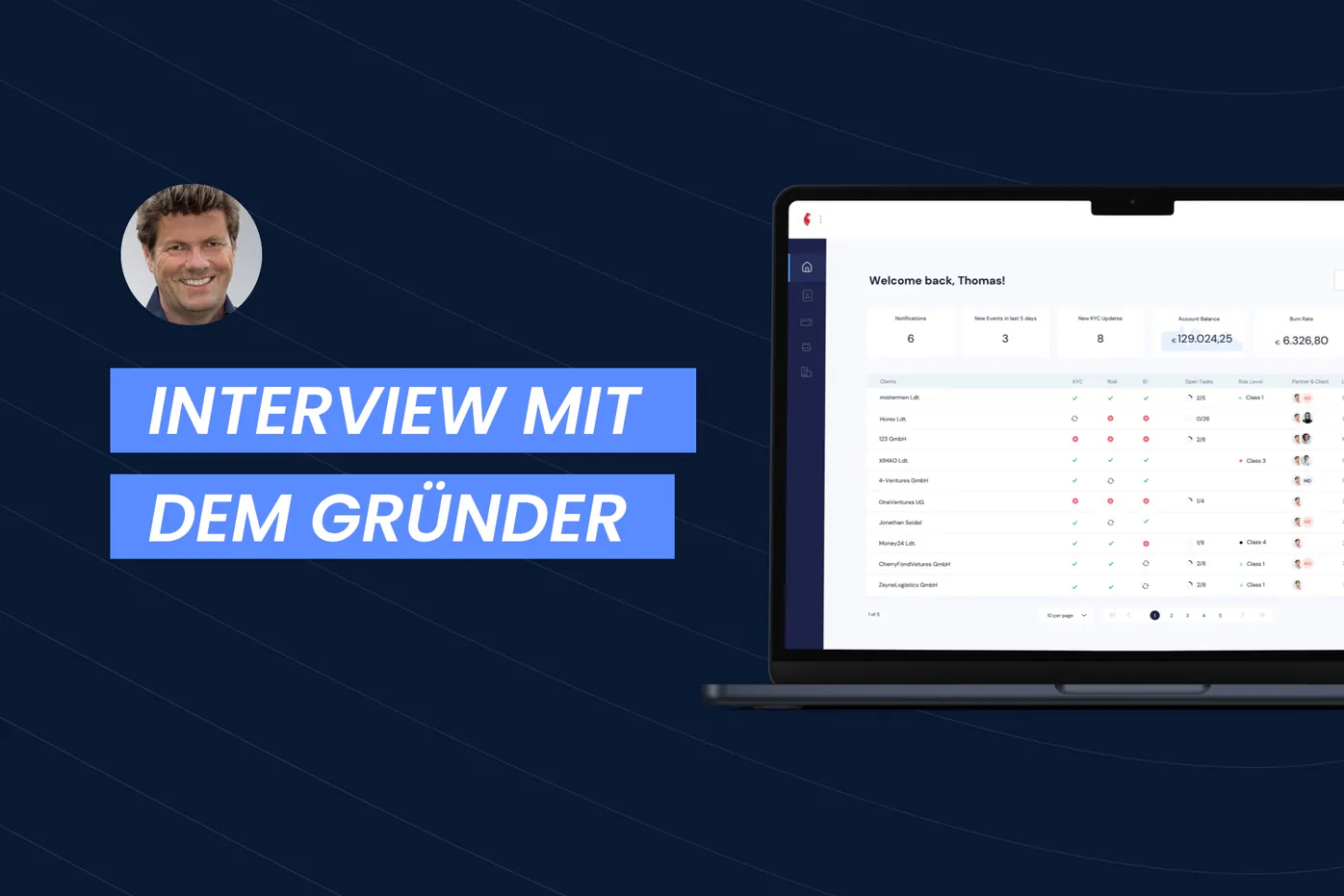 BetterCo: interview with founder Eckhard Ortwein
-
 Paperwork is a challenge, even when it's digital